
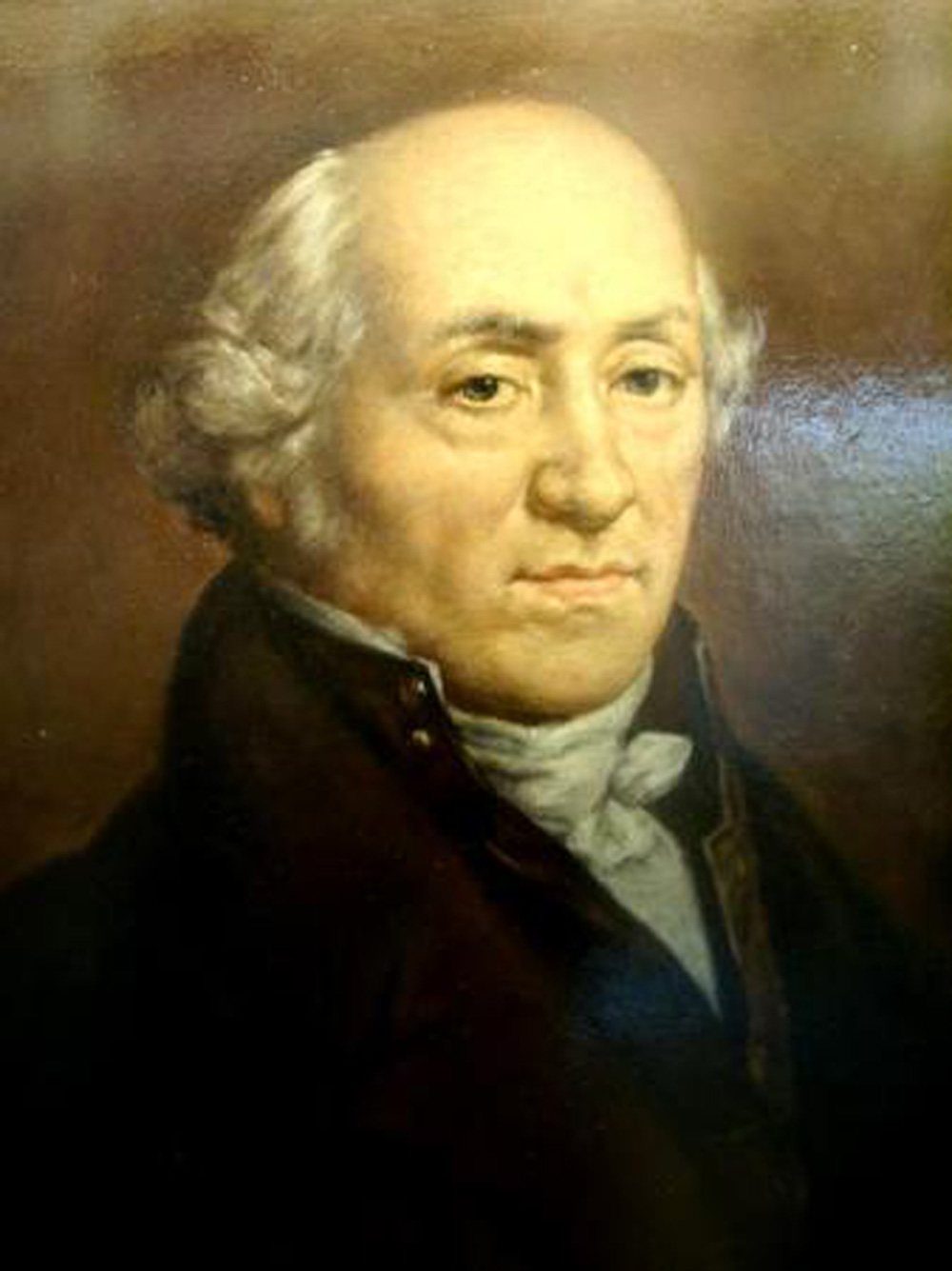
Few watch names carry as much history as Breguet, and few are as misunderstood on the pre-owned market. Ask ten collectors what a "vintage Breguet" is and you get ten answers. That is because the name has passed through five owners in 250 years, and each period produced very different watches.
This guide sorts out those periods, explains which watches from each one turn up on the market, and lists what we look at before we buy or recommend one.
Where the name comes from
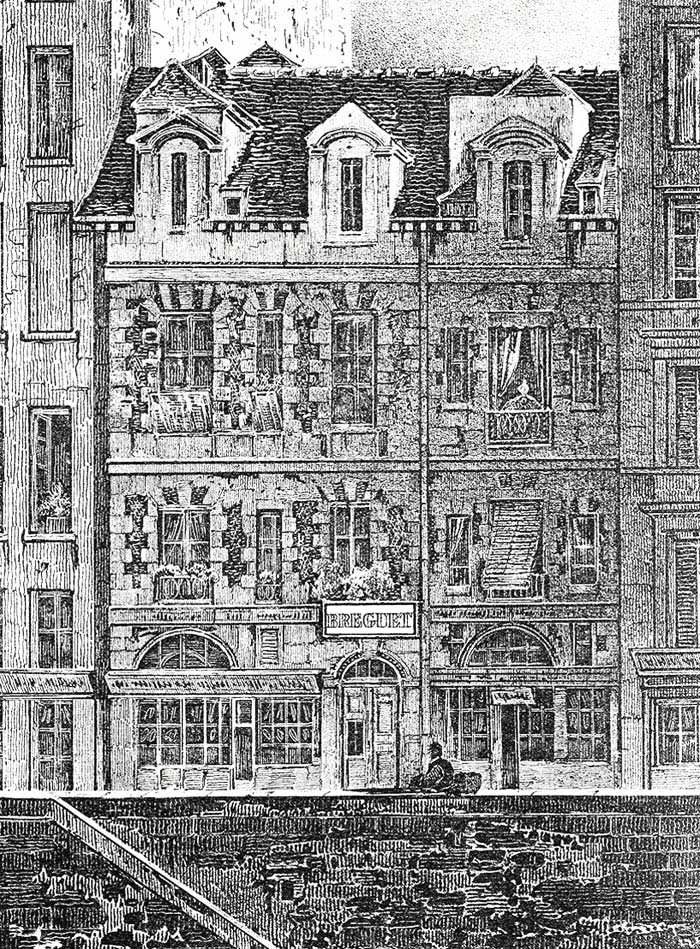
Abraham-Louis Breguet was born in Neuchâtel in 1747, trained in Versailles and Paris, and opened his own workshop on the Quai de l'Horloge on the Île de la Cité in Paris in 1775. Within a few years his clients included Marie Antoinette and Louis XVI.
Almost every feature we still call "Breguet" goes back to him:
- The tourbillon. He began work on it in 1796 and patented it in 1801. His own records list about 40 tourbillons made between 1796 and 1829.
- Breguet hands. Slim blued-steel hands with an open, off-centre circle ("pomme") near the tip.
- Guilloché dials. Patterns cut into the dial by a hand-turned rose engine, mainly so the hands stay readable against a non-reflective surface.
- The secret signature. From 1795, a tiny engraved signature on the dial, readable only at an angle, to fight counterfeits. Fakers copied it anyway.
- One of the first wristwatches. In 1810 Caroline Murat, Queen of Naples, ordered a watch to be worn on the wrist, recorded in Breguet's registers as no. 2639. It is widely considered the first wristwatch, and today's Reine de Naples collection is named after her.
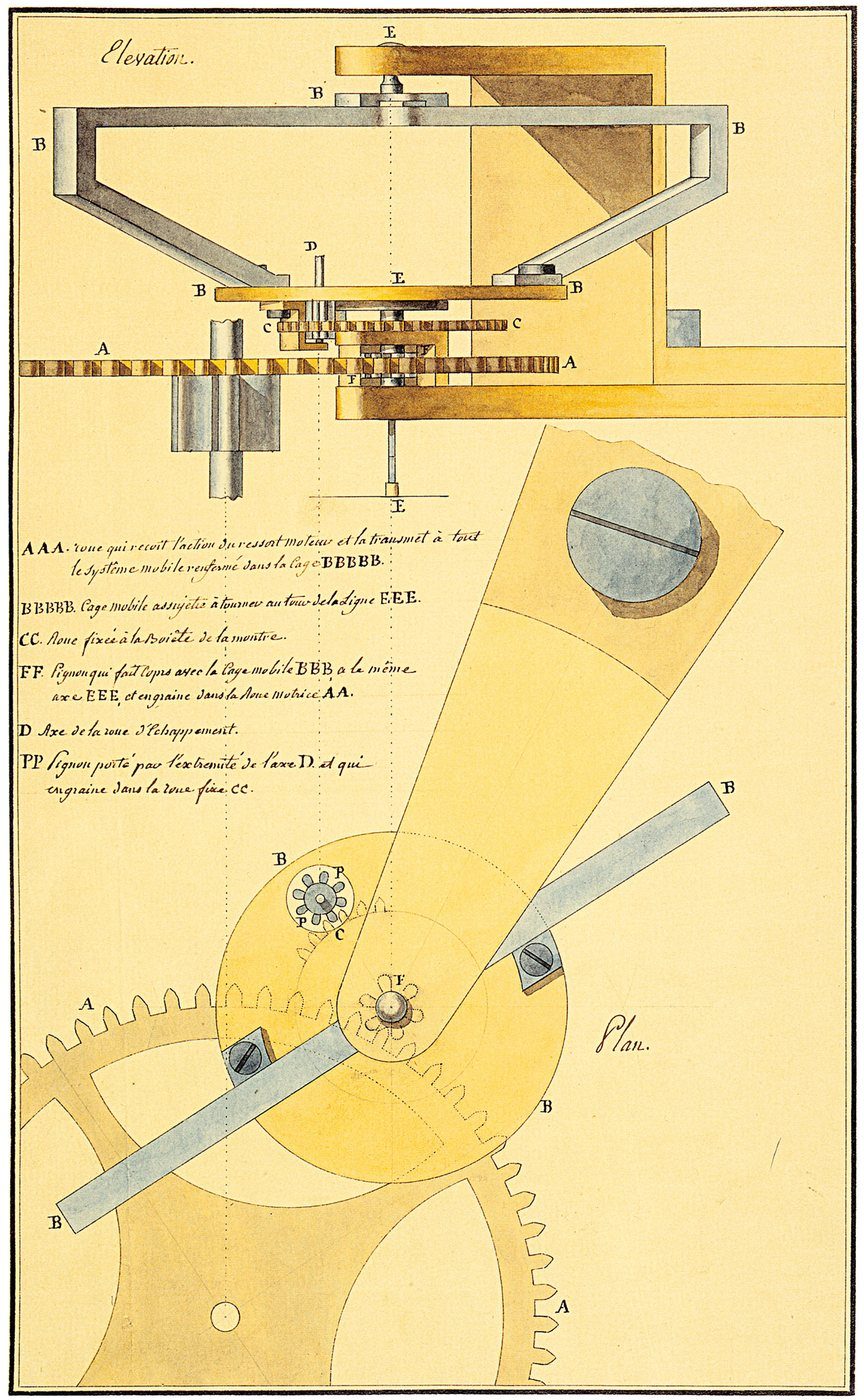
Watches from Breguet's lifetime and his son's are museum and auction pieces. Most of what reaches the normal pre-owned market is from the 20th century.
The five eras at a glance
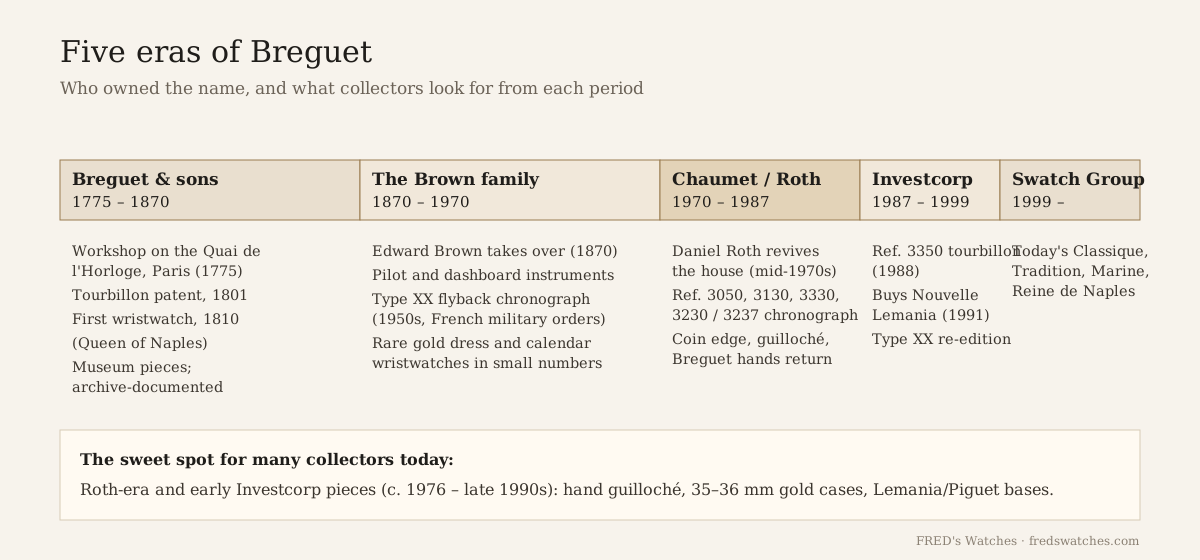
| Era | Owners | What to look for |
|---|---|---|
| 1775–1870 | Breguet and his sons | Pocket watches, carriage clocks; archive-documented, auction territory |
| 1870–1970 | The Brown family | Pilot's and military chronographs (Type XX), rare gold dress and calendar wristwatches |
| 1970–1987 | Chaumet brothers, with Daniel Roth as technical and artistic director | The revival: refs. 3050, 3130, 3330, 3230/3237 |
| 1987–1999 | Investcorp | Ref. 3350 tourbillon (1988), Nouvelle Lemania bought (1991), Type XX re-edition |
| 1999– | Swatch Group | Today's catalogue; the neo-vintage pieces of the early 2000s |
The Brown years (1870–1970): instruments and the Type XX
In 1870 the Breguet family sold the business to its workshop manager, the Englishman Edward Brown. His family ran it for a full century. Under the Browns, Breguet became as much an instrument maker as a watchmaker: pilot's chronographs from the 1920s, cockpit clocks, marine chronometers.
Wristwatches from this period are scarce. Gold chronographs and calendar watches were made in small numbers, and steel examples are rarer still. When one appears at auction, Breguet's archive usually tells you the buyer and the date of sale. Sotheby's recent Breguet sales, for example, listed a Type XX sold to the aircraft company Société d'Aviation Louis Breguet in January 1954, and a 1965 triple-calendar chronograph sold to a private client for 1,480 francs, now estimated at CHF 40,000–80,000.
The Type XX
The watch most people mean by "vintage Breguet" is the Type XX (Type 20). In the early 1950s the French Ministry of Defence wrote a specification for a pilot's chronograph: black dial, luminous Arabic numerals, a rotating bezel, and a flyback function, so a pilot could reset and restart the timer with one push. Several makers built watches to that brief. Breguet's became the best known.
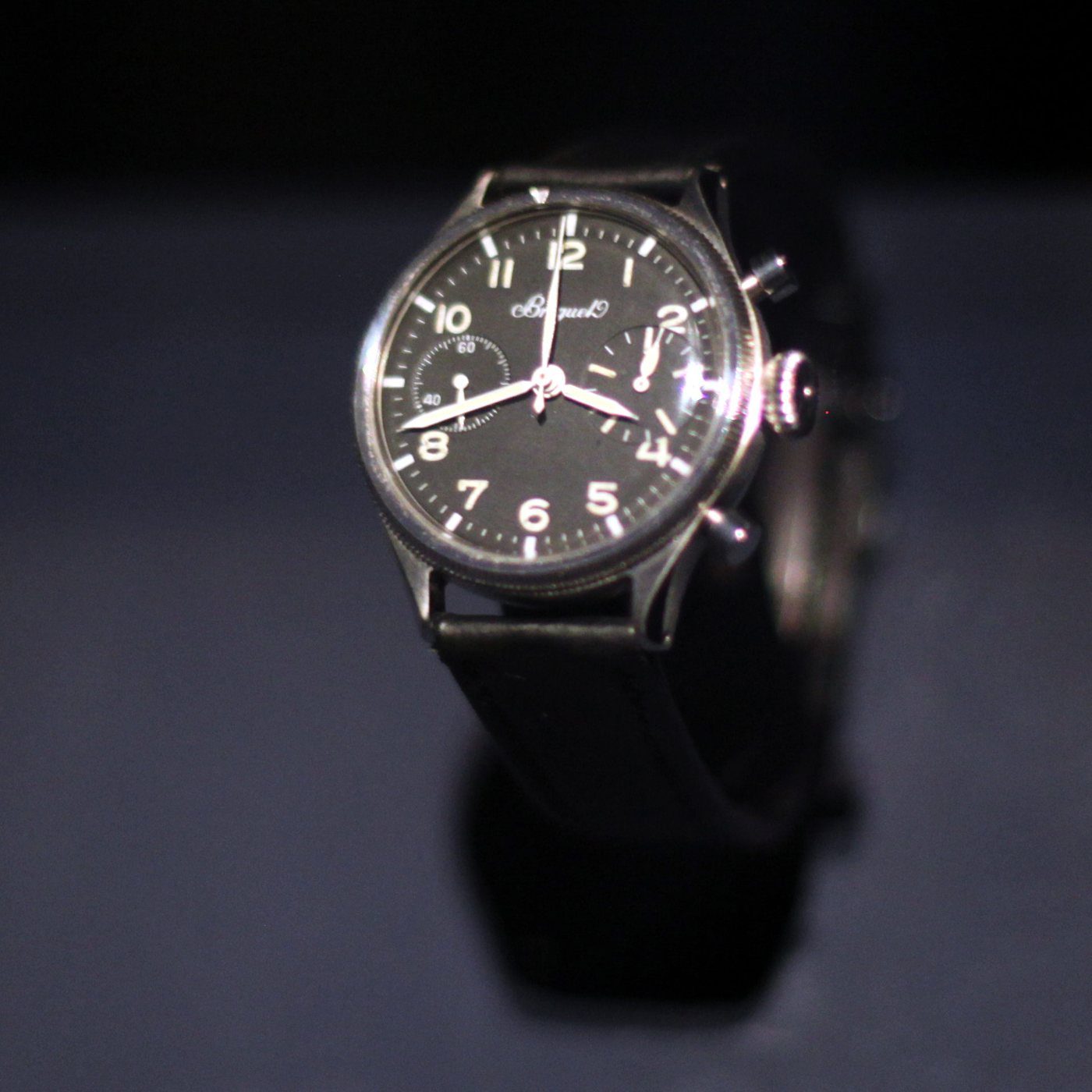
What collectors distinguish:
- Military "Type 20" watches belonged to the French state and were issued to pilots: the Air Force from the mid-1950s, the flight test centre (CEV), and the Naval Air Arm (Aéronavale) from 1960. Many have unsigned dials and state markings on the caseback.
- Civilian "Type XX" watches were sold through Breguet, often with a signed dial and sometimes a 12-hour counter.
- Movements are Valjoux-based (the Valjoux 222 with a flyback module, and the three-register Valjoux 225 on some versions). Cases are about 38 mm.
Two warnings. First, original Type XX watches were working tools; many were serviced by the military with replacement dials, hands and bezels, so a "perfect" one deserves extra questions. Second, numbers were small: specialist sources speak of about 1,100 watches for the French Air Force (order 5101/54), about 500 for the Aéronavale, delivered in 1960, and a smaller batch for the flight test centre. Auction estimates for well-documented examples now start at roughly CHF 24,000 and go far higher for early or unusual pieces.
Breguet reissued the design in the 1990s (Type XX Aéronavale and Transatlantique). Those are excellent watches, but they are modern, automatic and 39–40 mm: not the same thing.
The Roth years (c. 1975–1988): the Classique is born
In 1970 the Paris jewellers Jacques and Pierre Chaumet bought Breguet from the Brown family. The brand was in poor shape. The Chaumets hired the watchmaker Daniel Roth, then at Audemars Piguet, in the mid-1970s (sources say 1973 or 1975). Roth moved production to the Vallée de Joux and rebuilt the house from its own archives.
Almost everything people now picture as "a Breguet" was set in those years:
- a 35–36 mm gold case with a fluted "coin-edge" band,
- straight welded lugs with screw bars,
- a hand-engine-turned dial, often in solid gold with a silvered finish,
- blued Breguet hands and Roman or Breguet numerals,
- movements bought in as high-grade bases (mostly Lemania and Frédéric Piguet) and finished to Breguet's standard.
The references that matter
| Reference | Introduced | What it is | Base movement |
|---|---|---|---|
| 3050 | 1976 | Automatic perpetual calendar, 36 mm, under 8 mm thick | Frédéric Piguet |
| 3130 | early 1980s | Moon phase, power reserve and date, based on Breguet pocket watch no. 5 (1794) | Frédéric Piguet 71 (Breguet cal. 502) |
| 3330 "Chinoise" | early 1980s | Off-centre time with day, date and moon, based on pocket watch no. 4579 | – |
| 3230 / 3237 | mid-1980s | Two-register manual chronograph, 36 mm, coin edge | Lemania 2310 |
| 3310 | 1986 | Perpetual calendar with power reserve | Frédéric Piguet |
| 3350 | 1988 | One-minute tourbillon, Breguet's first tourbillon wristwatch | Lemania-based cal. 558 |
The 3130 became Breguet's best-seller and is the classic entry into a "complicated" Roth-era piece. The 3237 chronograph is the collector favourite: its Lemania 2310 base is the same family used by Patek Philippe and Vacheron Constantin for their chronographs, and finishing is superb. A rare lapis lazuli-dial 3237 from about 1995 sold for CHF 146,050 at Phillips in Geneva in November 2023, against an estimate of CHF 10,000–20,000; normal gold examples sell for a fraction of that.
The Chaumet brothers went bankrupt in 1987; the investment group Investcorp took over Breguet, and Roth left at the end of the 1980s to found his own brand. Investcorp bought the movement maker Nouvelle Lemania in 1991 (it later became the Breguet manufacture), and in 1999 the Swatch Group acquired Breguet.
Why these watches are good value
Pre-owned Breguet is one of the quieter corners of the market. One price guide puts simple pre-owned gold Classique dress watches such as the 3910 at around US$7,000 and used Classiques at roughly 40–50 % of the new list price. For a hand-guilloché solid-gold watch with a serious movement, that is a lot of watch for the money. The reverse side: values rise slowly, and condition and completeness make a big difference.
How to read a Breguet reference
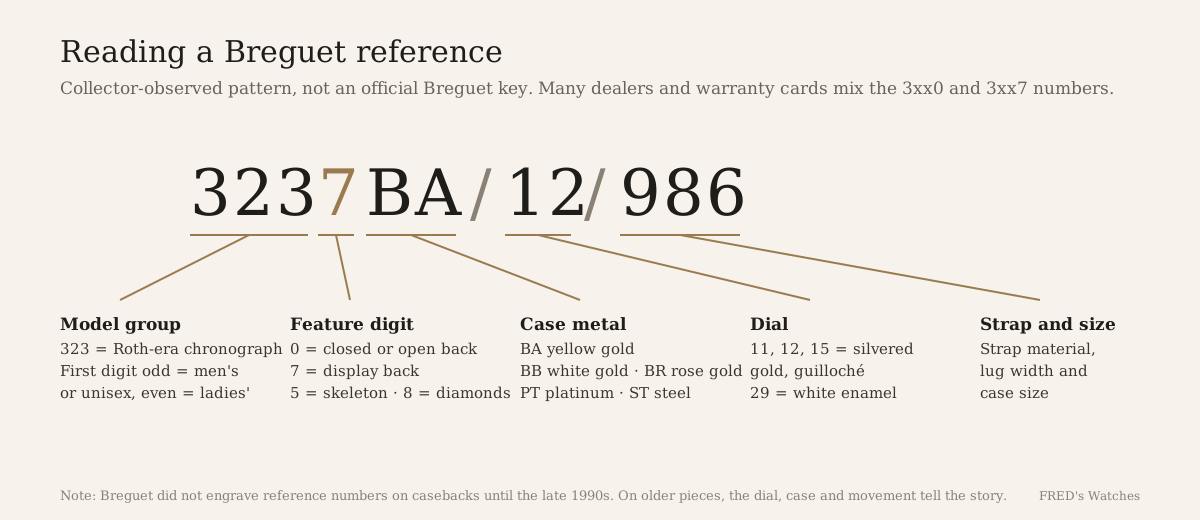
Collectors have worked out a pattern in Breguet's references, and it helps when a listing gives only a number. It is not an official key, and some references do not follow it, but it works for most Roth-era and later pieces:
- First three digits: the model. An odd first digit usually means a men's or unisex watch.
- Fourth digit: a feature. 0 = plain (closed or open back), 7 = display back, 5 = skeleton, 8 = diamond bezel. That is why the 3230 and 3237 are the same chronograph with different backs.
- Letters: case metal. BA yellow gold, BB white gold, BR rose gold, PT platinum, ST steel.
- After the first slash: dial code. 11, 12, 15 are silvered gold guilloché dials, 29 white enamel.
- After the second slash: strap and size.
Breguet did not engrave reference numbers on casebacks until the late 1990s, and dealers and warranty cards used the "0" and "7" versions interchangeably. On an older piece, trust the watch itself over the paperwork number.
What we check before buying a vintage Breguet
- The guilloché. Real engine-turned guilloché has depth: tilt the watch and the pattern changes as light moves across the cuts. Stamped or printed patterns look flat from every angle. Refinished dials often lose sharpness at the edges of the pattern.
- The secret signature. On most Breguet dials from the later Roth years onwards, a tiny "Breguet" and a number are engraved on the dial, visible only at an angle under a loupe. On Classique dials they usually sit on either side of the XII; the exact position varies by model and dial type, so compare with a known genuine example of the same reference. The number on the dial is only part of the serial; the full number is on the caseback. Its absence is not automatically a problem: collector research shows early Roth-era dials and some references, such as the 3310, never had it. A signature on a dial variant that should not have one is the bigger question.
- Serial format. According to collector research, watches made before about 1987/88 carry plain numbers (collectors call them "PRE-A"). After that Breguet added letter suffixes (A, B, C, D, E…). A plain number on a supposedly 1990s watch, or a lettered number on a "1980" watch, needs explaining.
- Dial text. Early dials say "SWISS"; later dials from the late 1990s onwards often read "SWISS GUILLOCHE MAIN". A small number of very early dials have no "SWISS" at all.
- Crown. Very early pieces have a flat crown without a logo; cabochon crowns appear mostly from the mid-1980s to the late 1990s; flat crowns with a "B" are later. Some references (for example the 3230 and 3350) never had a cabochon.
- Case edges and lugs. The coin-edge band should be crisp. Soft, rounded fluting means heavy polishing. Lugs are welded on; check for repairs.
- Movement. The base calibre should match the reference (Lemania 2310 in a 3237, Piguet 71-based in a 3130). Ask for a photo of the movement and the date of the last service. Servicing complicated Roth-era pieces at Breguet is not cheap; factor it in.
Ask Breguet's archive
Breguet keeps records of almost every watch it has sold since the 18th century. Through the contact form on Breguet's website you can send the serial number and photos. The brand says it will email the main information (type of watch, date of manufacture) free of charge. For a formal document, Breguet offers an archive extract for watches made after 1989 and a handwritten certificate for watches made before 1989, for a fee of just over €600 (Breguet's price in 2026). Breguet also says that this information is not proof of authenticity and that it gives no valuation. Treat it as an important piece of the story, not the whole story.
Frequently asked questions
Is a vintage Breguet a good investment? Breguet has historically been less volatile than Rolex or Patek Philippe. Most Roth-era Classiques trade well below new prices, which makes them good watches to own rather than short-term investments. Documented Type XX chronographs and rare complications have risen strongly at auction.
What is the difference between the Breguet Type XX and Type 20? "Type 20" is the French military specification and usually refers to state-owned watches issued to pilots. "Type XX" is the name used for Breguet's civilian version. Both are 1950s–1970s flyback chronographs with Valjoux-based movements.
Who was Daniel Roth at Breguet? Daniel Roth was the watchmaker the Chaumet brothers hired in the mid-1970s to revive Breguet. He designed the modern Classique look (coin-edge cases, guilloché dials, Breguet hands) and references such as the 3050, 3130, 3237 and 3350, then left at the end of the 1980s to found his own brand.
How can I check whether a Breguet is genuine? Compare the serial format, dial text, crown and movement with known examples of the same reference, check the guilloché under light, and ask Breguet's archive for the record of the serial number. For an expensive piece, have an independent watchmaker open it.
Does a Breguet need a secret signature to be real? No. Many early Roth-era dials and some references never had one. Fakes, on the other hand, often copy it.
Looking for a vintage Breguet?
We do not have a Breguet in stock at the moment. If you are looking for a specific reference, a Roth-era Classique or a Type XX, tell us through our watch search request and we will look for you, using the checks above.
A personal word
"I love Breguet more than almost any other name in watchmaking. It is the stories behind it, of a queen, of pilots, of a watchmaker in his workshop on the Quai de l'Horloge, that speak of a different time. And you can see the craftsmanship in every single piece, from Abraham-Louis Breguet's own watches until today." Frederic, FRED's Watches
Sources and further reading
- Breguet.com, The Breguet House timeline and Authenticate a timepiece (Investcorp 1987, Nouvelle Lemania 1991, archive service and certificate price)
- Swatch Group press release, 14 September 1999 (acquisition of Groupe Horloger Breguet)
- Sotheby's, The Complete Guide to Breguet Watch Collecting (history, tourbillons, auction estimates)
- Phillips, The Fine Print: Exploring Breguet in the Daniel Roth Era and Beyond, and lot 30, Geneva Watch Auction XVIII (ref. 3237, November 2023)
- Fondation de la Haute Horlogerie and Seiko Museum on Abraham-Louis Breguet (1747, 1775, 1801 patent, Queen of Naples)
- Monochrome Watches, A Complete Collector's Guide to Daniel Roth
- Swisswatches Magazine, The Ultimate Guide to Breguet's Type XX Pilot's Watches
- Tahoma Watches, A collector's guide to early Roth-era Breguet (serial formats, dial, crown and reference observations)
- Luxury Bazaar, Breguet watch price guide (pre-owned price levels)
Image credits: portrait of Abraham-Louis Breguet, Quai de l'Horloge engraving and tourbillon drawing: public domain via Wikimedia Commons. Type XX photo: Rama, CC BY-SA 3.0 FR, via Wikimedia Commons. Diagrams: FRED's Watches.