
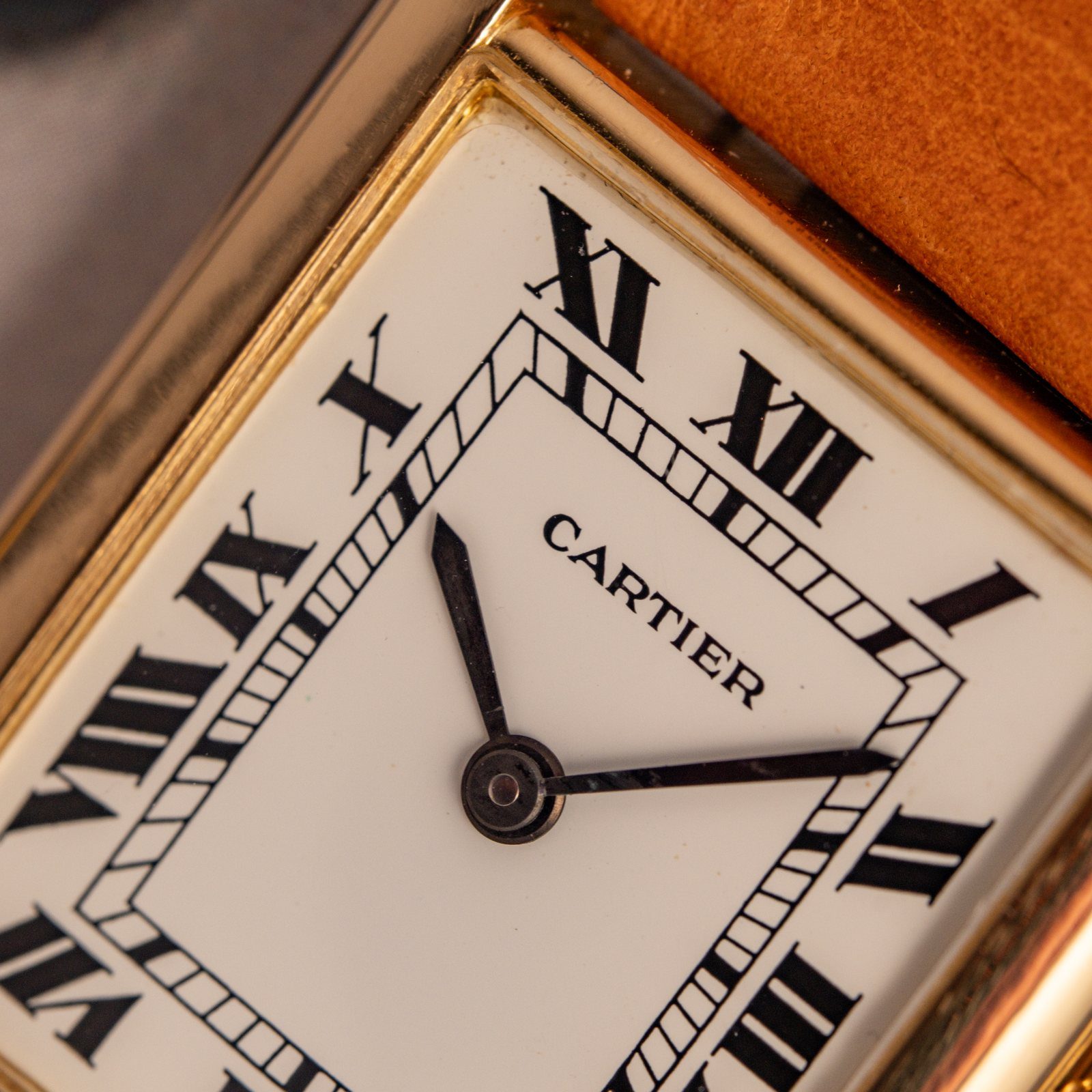
For decades Cartier was seen as a jeweller that also sold watches. Collectors have changed their minds. In May 2021 a small gold Cartier London "Pebble" from 1972 sold at Phillips in Geneva for CHF 403,200, against an estimate of CHF 50,000–100,000. The Pebble was a London design from the era of Jean-Jacques Cartier (Jacques Cartier's son), with a case made in London by Wright & Davies and a hand-wound Jaeger-LeCoultre calibre P838 signed Cartier; only a handful of the large size are known. According to Chrono24 data, Cartier's share of watches bought by Gen Z buyers on the platform rose from 1.7 % in 2018 to 6.8 % in 2023. Dress watches are back, and the Tank is the dress watch.
This guide explains where vintage Cartier watches come from, how the Tank family fits together, and what we look at before we put a vintage Cartier in our shop.
Three houses, one name
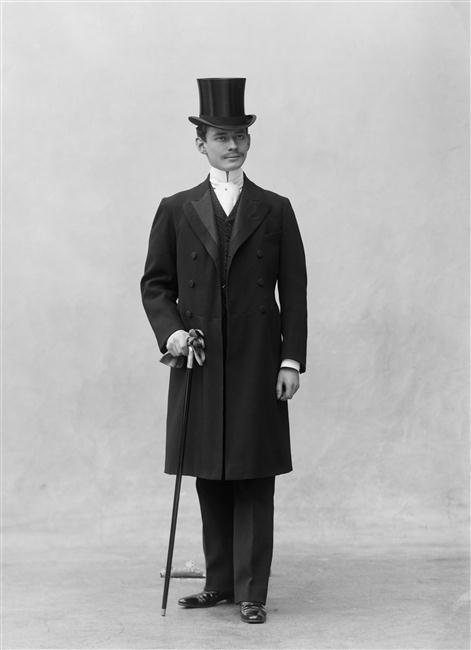
Cartier was founded in Paris in 1847 by Louis-François Cartier and moved to 13 rue de la Paix in 1899. His three grandsons split the world between them:
- Louis Cartier ran Paris and designed the watches that made the name: the Santos, the Tortue, the Tank.
- Pierre Cartier opened New York, famously buying the Fifth Avenue mansion in 1917 in exchange for a pearl necklace.
- Jacques Cartier ran London.
The three houses shared designs but made their own versions, with different suppliers. In the 1960s the family sold the three businesses separately. A group led by Robert Hocq bought Cartier Paris in 1972 and brought London (1974) and New York (1976) back under one roof. For collectors, that history explains why two "identical" vintage Tanks can be quite different.
| Paris | London | New York | |
|---|---|---|---|
| Dial signature | Often "Paris" on the dial, sometimes on the caseback, sometimes neither | Some dials signed "London"; English hallmarks on the case | Usually no city on the dial; often just "Swiss" |
| Typical movements | Jaeger and LeCoultre, later Piguet, Piaget and others | Jaeger-LeCoultre and other Swiss makers | European Watch & Clock Co. (EWC), owned by Cartier |
| Character | The classic Cartier designs | Smaller output, bolder variations | Local sizes and versions for American buyers |
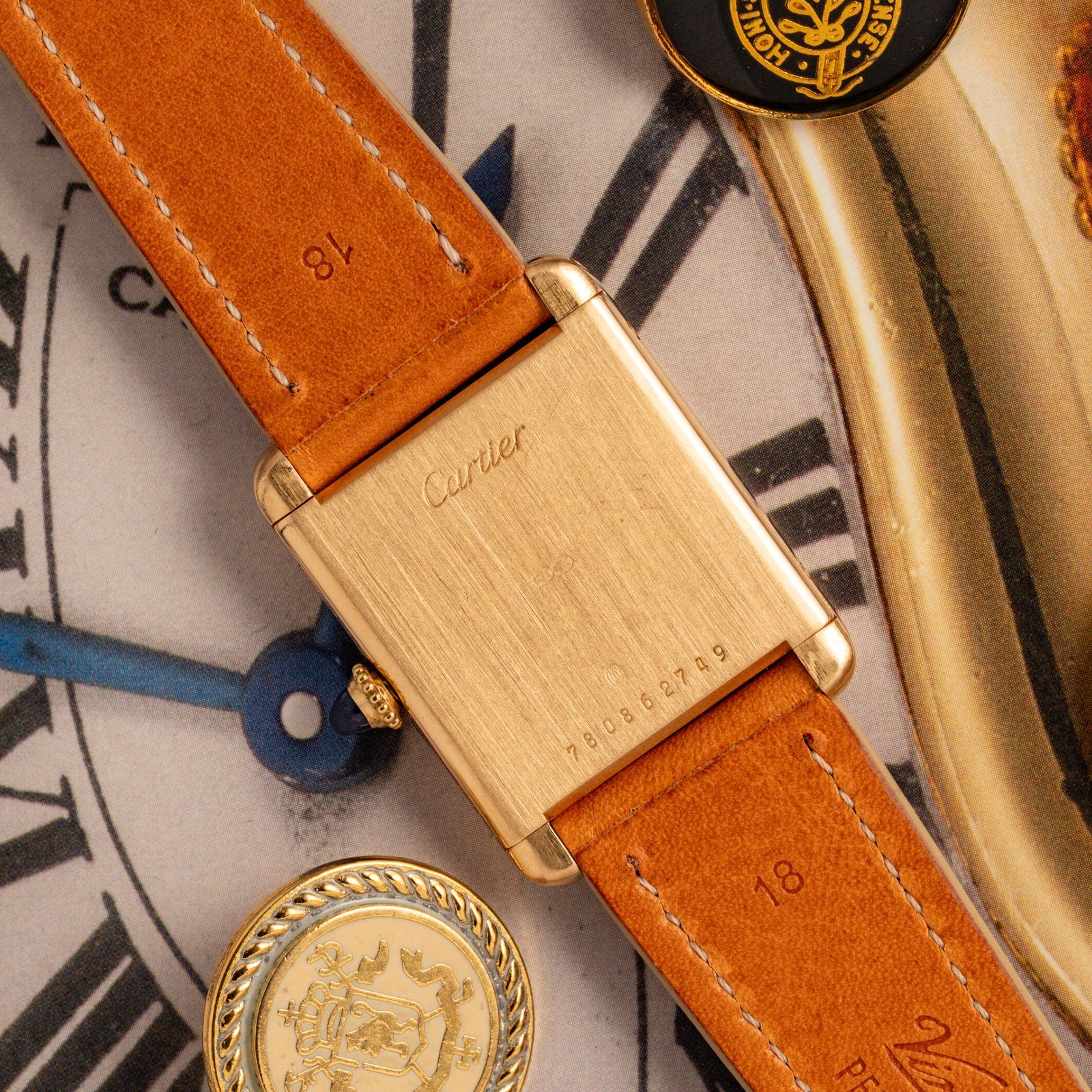
A London case with English hallmarks, or an EWC-stamped New York movement, is often the only reliable way to place an early watch. Cartier did not use model reference numbers until much later; vintage pieces rely on the serial number on the caseback, and Cartier does not publish serial records.
The Santos (1904): where the men's wristwatch started
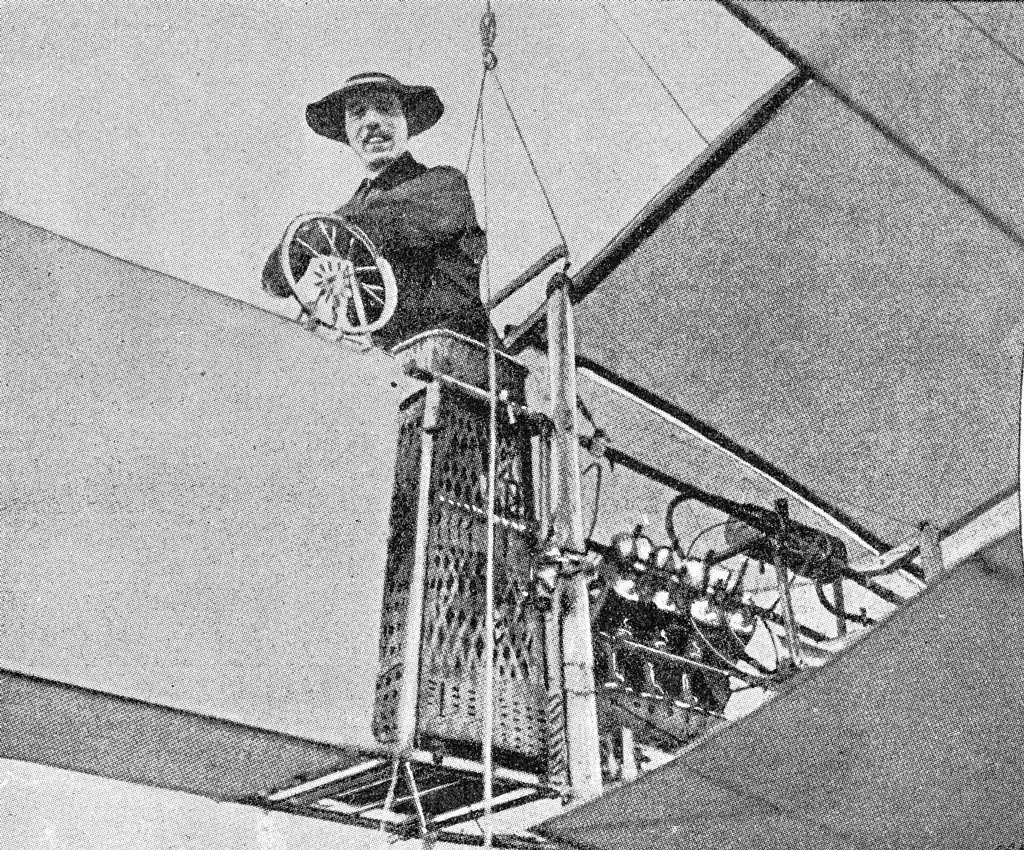
Louis Cartier made a watch for his friend Alberto Santos-Dumont, the Brazilian aviator who could not take a pocket watch out while holding the controls of his flying machines. Cartier dates it to 1904; no document from that year survives, and the date comes from Cartier's own later records. The square case with screwed bezel is one of the first wristwatches designed for a man. In 1907 Cartier signed an agreement with the movement maker Edmond Jaeger that reserved Jaeger's movements for Cartier, and from 1911 the Santos was sold to the public.
The Santos most people know today is younger. In 1978, under Alain-Dominique Perrin, Cartier launched a Santos in steel and gold, with gold screws on the bezel and bracelet. Until then Cartier had worked almost only in precious metals, so a steel Cartier was a real risk. It worked, and the two-tone Santos became one of the defining watches of the 1980s. In 1987 it was revised as the Santos Galbée (curved case).
What to check on a vintage Santos: wear on the gold-plated or solid-gold screws (screwdriver marks), stretch and repairs in the bracelet, and that the dial and hands are original. Original papers add confidence and value.
The Tank (1917): the shape of a tank, seen from above
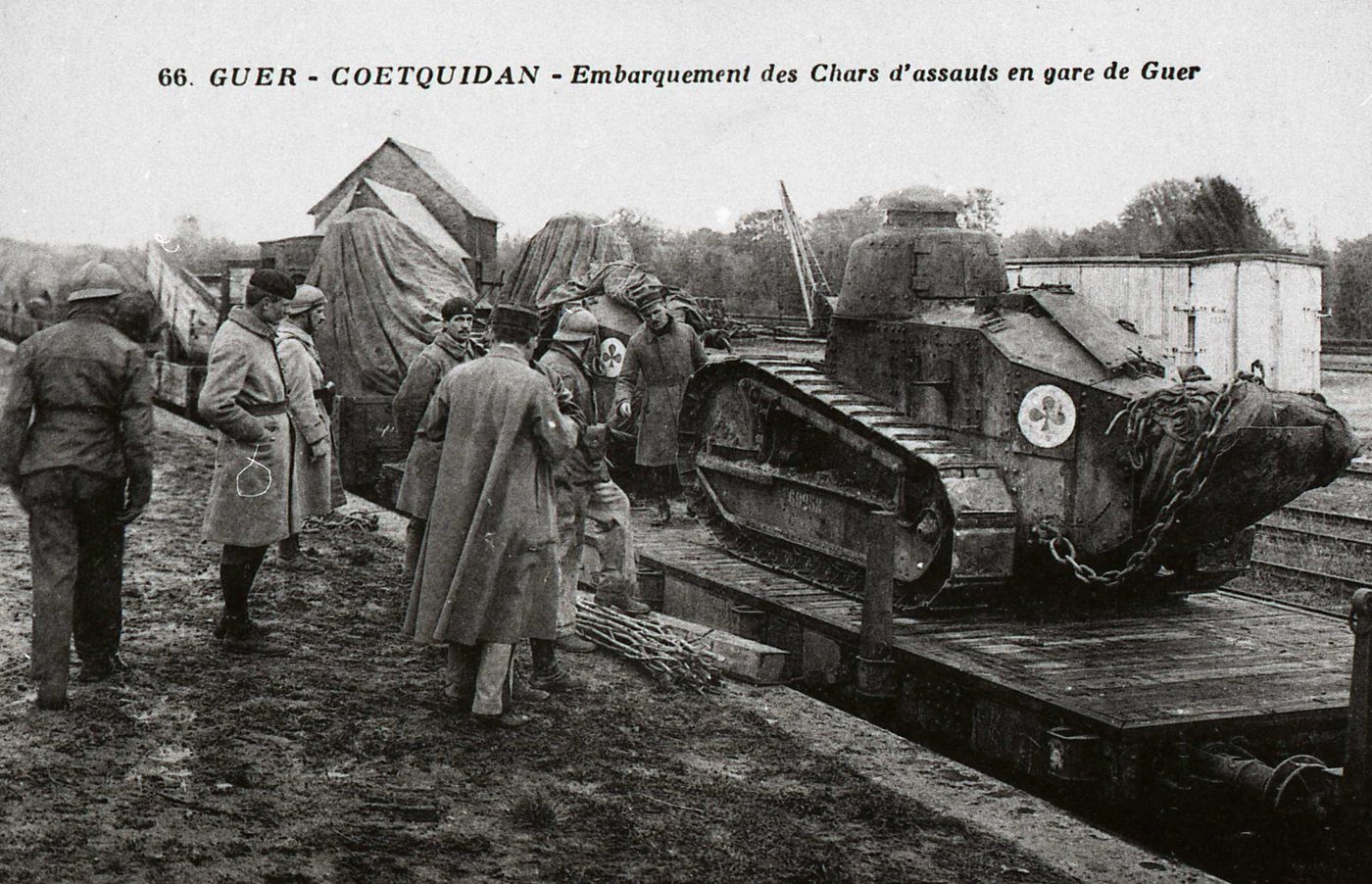
Louis Cartier designed the Tank in 1917; prototypes followed in 1917 and 1918, and the first watches were sold in 1919. The shape is inspired by the tanks of the First World War, usually linked to the French Renault FT: seen from above, the two side rails of the case (the brancards) are the tank's treads, and the dial is the cabin between them.
The idea was simple enough to vary endlessly, and that is what Cartier did:
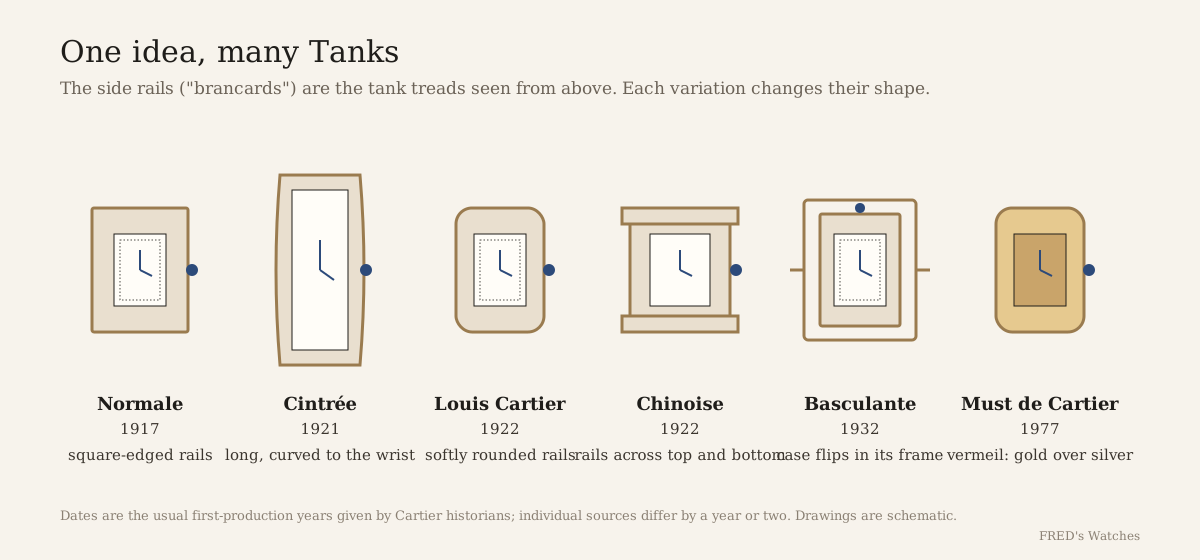
- Tank Normale (1917/1919): the original, with square-edged rails.
- Tank Cintrée (1921): long and curved to fit the wrist. Sold today as the Tank Américaine (a name used since 1989).
- Tank Louis Cartier (1922): softer, rounded rails. The most popular shape and the base for most later Tanks.
- Tank Chinoise (1922; some sources say 1921): rails across the top and bottom, inspired by the period's fashion for Chinese design.
- Tank Basculante (1932, the year of its patent application): the case swivels in its frame, in the same years as the Jaeger-LeCoultre Reverso (1931).
- Tank Asymétrique (1936): a slanted parallelogram, made in tiny numbers and very desirable.
Early sizes were given in lignes (one ligne is about 2.26 mm). Early Tanks came in 7 to 10 lignes, which is why genuine 1920s pieces look small on today's wrists.
The 1970s: Tank Louis Cartier ref. 78086 and the "Paris" dial
For most collectors, the realistic way into a solid-gold vintage Tank is the 1970s and 1980s Tank Louis Cartier, especially ref. 78086: an 18-carat yellow-gold case of about 23.5 × 30.5 mm, a manual-winding Cartier calibre 78-1 (17 jewels; a Cartier-signed version of the ETA 2512-1), a sapphire cabochon crown and a white dial with black Roman numerals and a "railway" minute track.
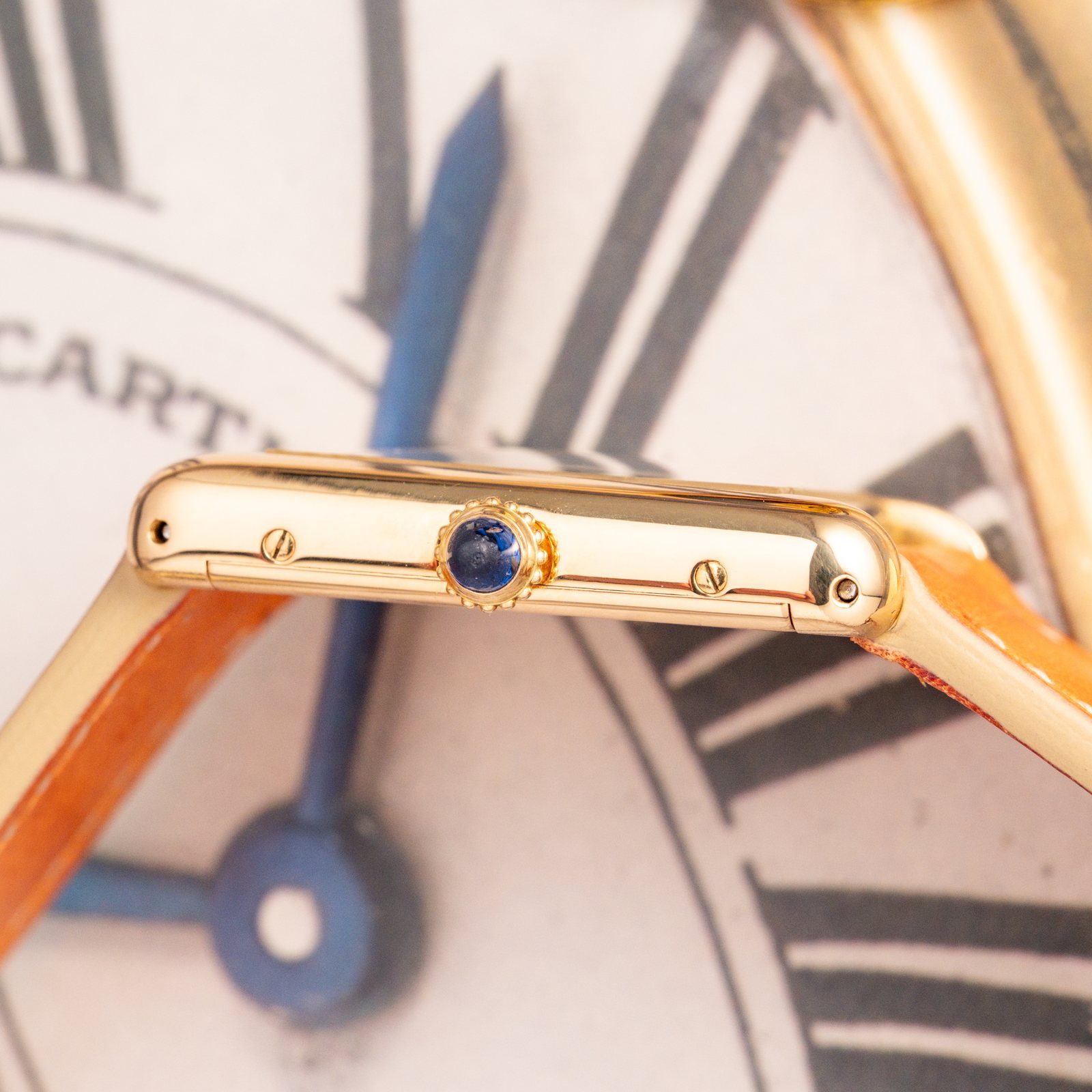
Two dials are found in the 78086:
- "Paris" dial: "PARIS" printed under the VI. Dealers and collectors generally see these as the earlier dials and pay more for them.
- "Swiss" dial: the later version, still original and correct, but less sought after.
Recent auction results give a realistic level: a 78086 sold at Finarte in Milan in December 2024 for €6,300, and one at Bonhams in New York in June 2026 for US$7,680 (both including buyer's premium). Dealers ask more for Paris dials in top condition, sometimes well over US$10,000.
The secret signature: present, absent, and why it matters
From some point in the 1970s or 1980s, Cartier began hiding a tiny "CARTIER" in the strokes of one numeral on many dials, usually in the VII, sometimes in the X. Nobody has published an exact start date. Dated examples suggest the mid-1970s at the earliest.
So:
- No secret signature on an early dial is normal.
- A secret signature on a dial that claims to be very early deserves a question.
- A replacement "service" dial often shows itself through small text differences, for example "Swiss Made" at the bottom instead of just "Swiss" or "Paris", or a different font. Because Cartier's service routinely replaced aged dials, a 78086 that originally had a Paris dial may come back from a service with a later one. That is one reason an original, untouched Paris dial carries a premium.
The Must de Cartier (1977): vermeil and colour
In the 1970s Robert Hocq and Alain-Dominique Perrin wanted to bring new, younger customers to Cartier. The answer was Les Must de Cartier, a line founded in 1973 with a boutique on the Place Vendôme: first lighters, pens and leather goods, then, from 1976/77, a Tank in vermeil, sterling silver with a thick layer of gold. Most sources date the Must Tank to 1977 (some to 1976); it was the first watch with "Must de Cartier" on the dial. According to Fratello, it cost about US$500 at launch, and Cartier's watch production grew from about 3,000 pieces a year in the mid-1970s to about 160,000 by the end of the decade, largely thanks to the Must line.
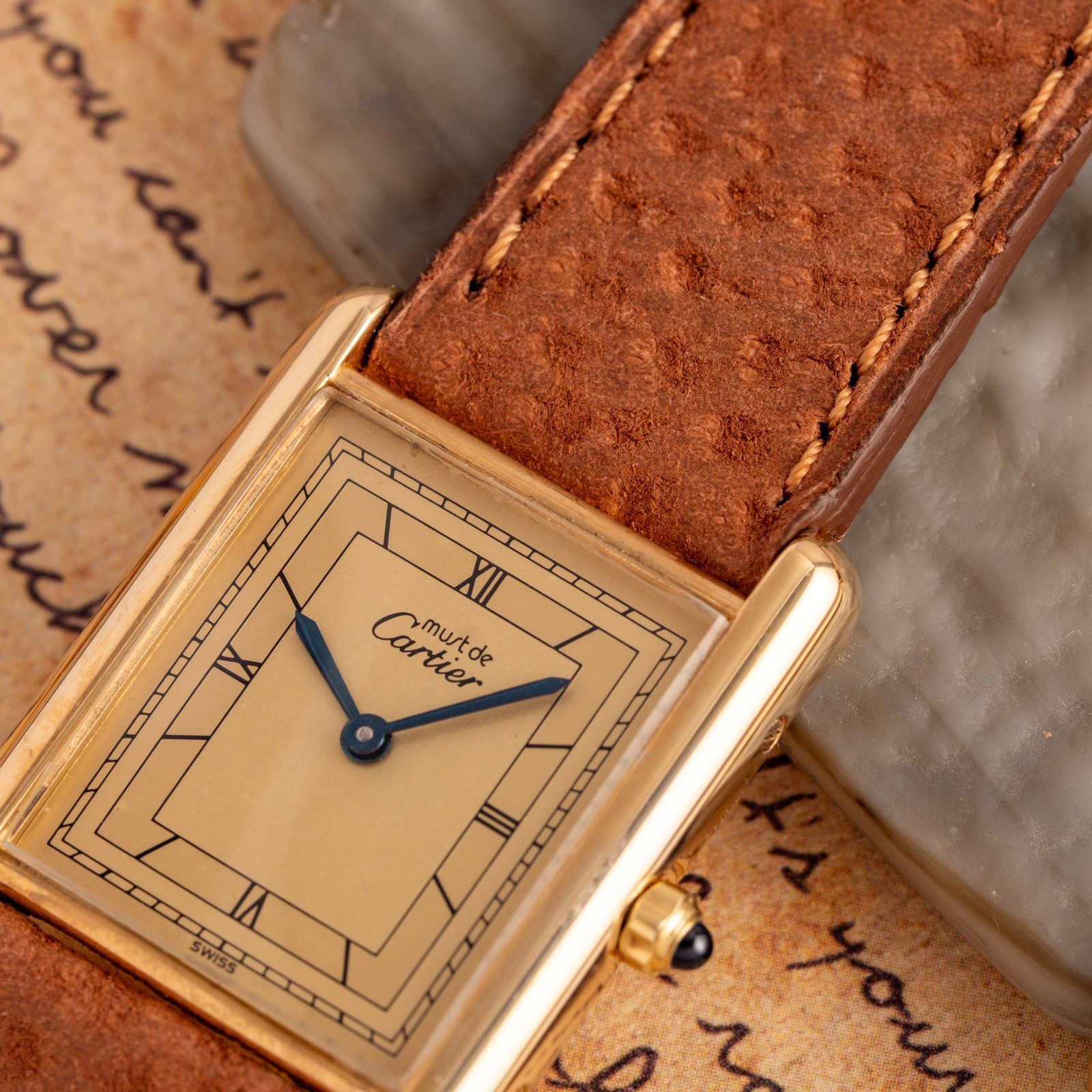
Why collectors like them now:
- The case is the real Tank Louis shape, just in vermeil. The gold layer is 20 microns, stamped on the caseback as "PLAQUÉ OR G 20 M", much thicker than ordinary gold plating.
- The dials. Besides the classic white Roman dial, the Must came in burgundy, navy, black, cream and doré lacquer, sector dials, faux lapis and onyx, and the three-colour "Trinity" dial.
- The price. Many vintage Musts still sell for under €2,000 (Fratello's estimate), much less than a modern Tank.
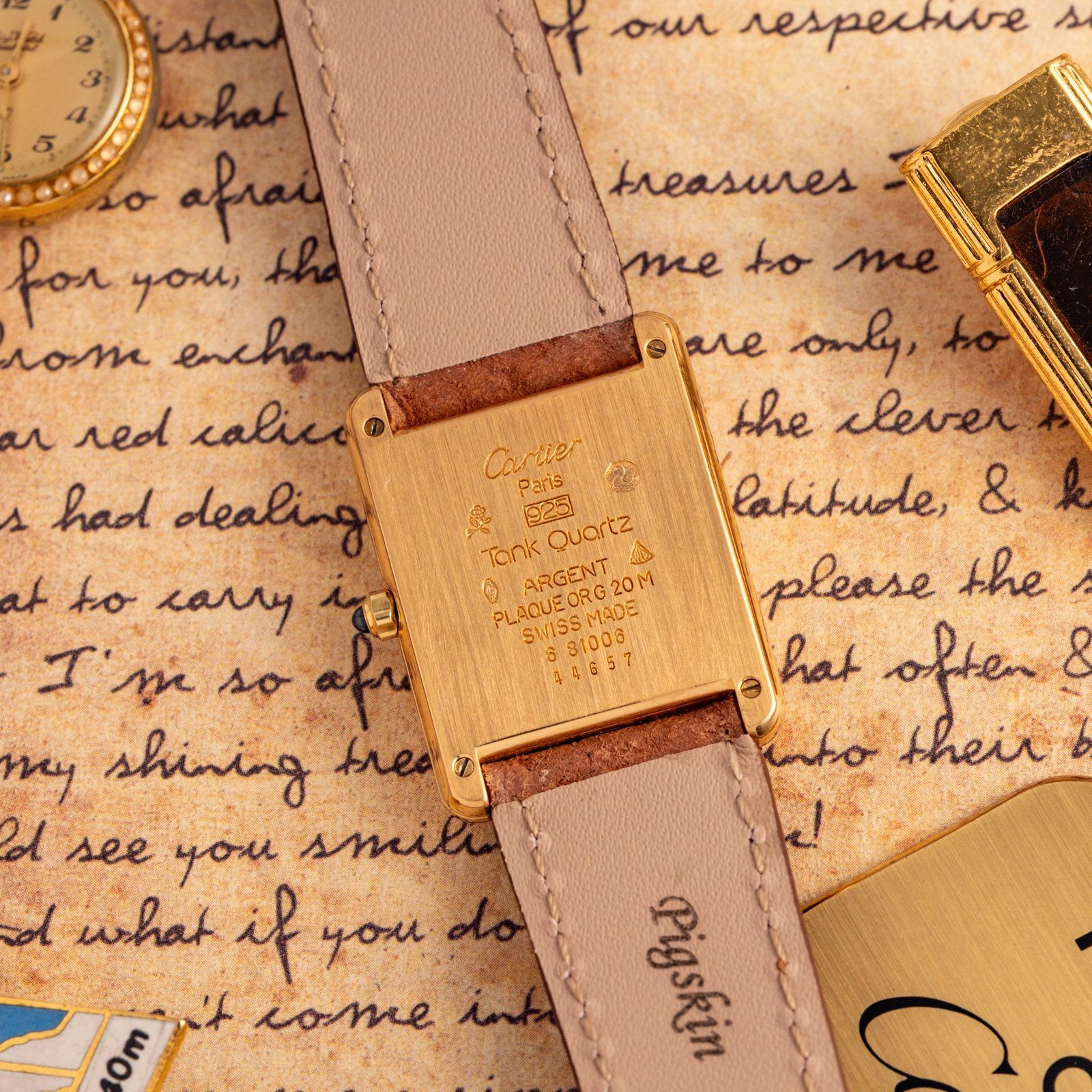
What to check on a Must:
- Plating wear. Look at the edges of the rails, the lugs and the caseback. Silver showing through lowers value. Re-plating is possible but changes the original finish.
- Dial condition. Lacquer dials can crack ("spider") and some colours oxidise. Small, even ageing is normal; large cracks are not.
- Movement. Early Musts were mechanical (ETA-based, hand-wound); quartz soon took over. Both are fine. Mechanical versions are more sought after; quartz versions are easier to live with. Check that the quartz movement is clean, without battery leakage.
- Size. "Large" Musts measure about 23 × 30 mm, the ladies' size about 20 × 28 mm.
What we check on every vintage Cartier
- Dial: original or replaced? Look at signature text, font, the minute track and, where expected, the secret signature. A cracked enamel or lacquer dial is still original; a perfect new service dial is not.
- Hands: blued steel sword hands should match each other and the period. Mismatched hands are a common sign of a replaced dial.
- Crown: a blue cabochon (sapphire or synthetic spinel) in a beaded crown that matches the case metal.
- Case: sharp rails with clear edges. Over-polished Tanks lose the crisp line between the brancards and the bezel.
- Service history: Cartier's own service often replaces dials and crowns as standard. If you service a vintage piece at Cartier, ask in writing for the original parts back.
Frequently asked questions
What is a "Paris dial" on a Cartier Tank? A dial printed with "PARIS" below the 6 o'clock position. On 1970s Tank Louis Cartier models such as the 78086, Paris dials are the earlier version and are worth more than the later "Swiss" dials.
Is a Must de Cartier a real Cartier? Yes. The Must de Cartier line was founded by Cartier in 1973, and Must Tanks were made and sold from 1977 (some sources say 1976). They are vermeil (gold over sterling silver) instead of solid gold, and most use quartz movements, but the design is the Tank Louis Cartier.
What is the Cartier secret signature? A tiny "CARTIER" hidden in one Roman numeral, usually the VII. It appears on many dials made from about the mid-1970s onwards; no exact start date has been published. Earlier dials do not have it.
Are Cartier London watches more valuable? Often yes. London pieces were made in smaller numbers, with English hallmarks and sometimes a "London" dial, and collectors pay a premium for them.
What does vermeil mean? Sterling silver covered with a layer of gold. Cartier's Must watches used a layer of about 20 microns.
Vintage Cartier at FRED's Watches
In our shop now: the Tank Louis Cartier ref. 78086 with an early Paris dial, a Must de Cartier Tank with a rare doré dial, Must Tanks in vermeil, a Santos with its original papers from 1994 and the Panthère. Every price includes insured express shipping.
Sources and further reading
- Sotheby's, Understanding the Differences Between Cartier Paris, Cartier London and Cartier New York
- Beyond the Dial, A Detailed Primer On a Century of Cartier Tanks (1919–present)
- The Rake, Watchonista, Bob's Watches and Monochrome Watches on the history of the Tank and its variants
- Swisswatches Magazine, How the Cartier Santos Took Flight (1904 dating, Jaeger agreement 1907, public sale 1911)
- The Rake and Mr Porter, on the 1978 steel-and-gold Santos
- Sotheby's lot notes and the-cartiers.com on the reunification of Cartier (1972–1976)
- Fratello, Value In Vintage: The Tank Must De Cartier (launch, vermeil, production figures, prices)
- Rewrist, Vintage Cartier Tank buying guide (20-micron vermeil)
- Revolution, Watch I Love: The Must de Cartier (Les Must founded 1973)
- Caliber Corner, Cartier caliber 78-1 (ETA 2512-1 base)
- Bonhams, Cartier London, and the-cartiers.com on the Pebble (Jean-Jacques Cartier, Wright & Davies, JLC P838)
- Phillips Geneva Watch Auction XIII (May 2021) and WatchPro on the Cartier London Pebble
- Sotheby's, Bonhams and Finarte auction records for the ref. 78086
- The Ethos, on Chrono24 data for Gen Z buyers
- Forum discussions on WatchUSeek, OmegaForums and WatchProSite (service dials, secret signature)
Image credits: Louis Cartier by atelier Nadar (1898), Santos-Dumont, Renault FT: public domain via Wikimedia Commons. Watch photos: FRED's Watches. Diagram: FRED's Watches.